Winter Scarf Complaints: Shedding, Pilling, Itching and 4 More Problems Buyers Can Prevent
"Sheds on your clothes like crazy." "Started pilling immediately." "Itchy." Winter scarf reviews are full of the same complaints. Here is what causes each one - and the sample test or spec that stops it before your customers write that review.
Quick answer: The most common winter scarf complaints are shedding fluff onto clothes, pilling, itchiness, static, not warm enough, too short or narrow, and colours that differ from the photo. You prevent most of them at the sample stage: rub-test for shedding and pilling, wear-test against the neck, measure the finished size, and approve colour on a physical sample - then hold bulk to that sample.
Search suggestions tell the story: "scarf shedding on clothes", "polyester scarf shedding fluff", "stop scarf shedding", "non pilling scarf", "scarf not itchy", "anti static scarf" and "warmest scarf material". Shoppers have been burned before. A scarf that avoids these problems earns reviews - and repeat orders for you.
1. Shedding fluff onto coats
What customers say: "Soft and comfy but sheds on your clothes like crazy." Travellers describe cheap "cashmere" scarves covering their clothes in polyester fluff.
Why it happens: loose surface fibres from heavy brushing or short, low-quality fibre.
How to prevent it: rub each sample firmly against a dark wool coat or black fabric for 30 seconds. Fluff on the dark fabric is the warning sign. A dense construction such as warp knit holds fibres better - our cashmere feel scarf is warp knitted for this reason.
2. Pilling after a few weeks
What customers say: the scarf looks old by mid-winter, with bobbles where it rubs against a coat collar or bag strap.
Why it happens: friction on weak or short fibres. Searches for "cashmere scarf pilling" show that even expensive scarves get blamed.
How to prevent it: rub-test the sample against itself and a bag strap, then wash it following the care label and check again. Approve only the sample that stays smooth.
3. Itchy on the neck
What customers say: wool, mohair and some blends feel scratchy - "itchy at first but you get used to it" is not a good review.
Why it happens: coarse fibres with stiff ends against sensitive neck skin.
How to prevent it: wear the sample against bare skin for an hour. Soft polyester cashmere-feel and brushed finishes are a common answer for customers who find wool itchy.
4. Static and clinging
What customers say: the scarf crackles, sticks to coats and lifts hair - especially in dry indoor heating.
Why it happens: synthetic fibres in dry air build static.
How to prevent it: test samples in a dry, heated room. On your product page, give simple tips (a light fabric conditioner on washing, avoid over-drying) so customers know what to expect.
5. Not warm enough
What customers say: "pretty but thin" - fine indoors, useless in the wind.
Why it happens: lightweight constructions sold as winter scarves.
How to prevent it: match the scarf to the season and say so honestly. Dense warp-knit and medium-thickness double-sided scarves are built for winter; lighter twill works as a shawl or for milder climates.
6. Too short or too narrow
What customers say: it will not wrap twice, cannot be worn as a blanket scarf, or does not cover enough for a hijab.
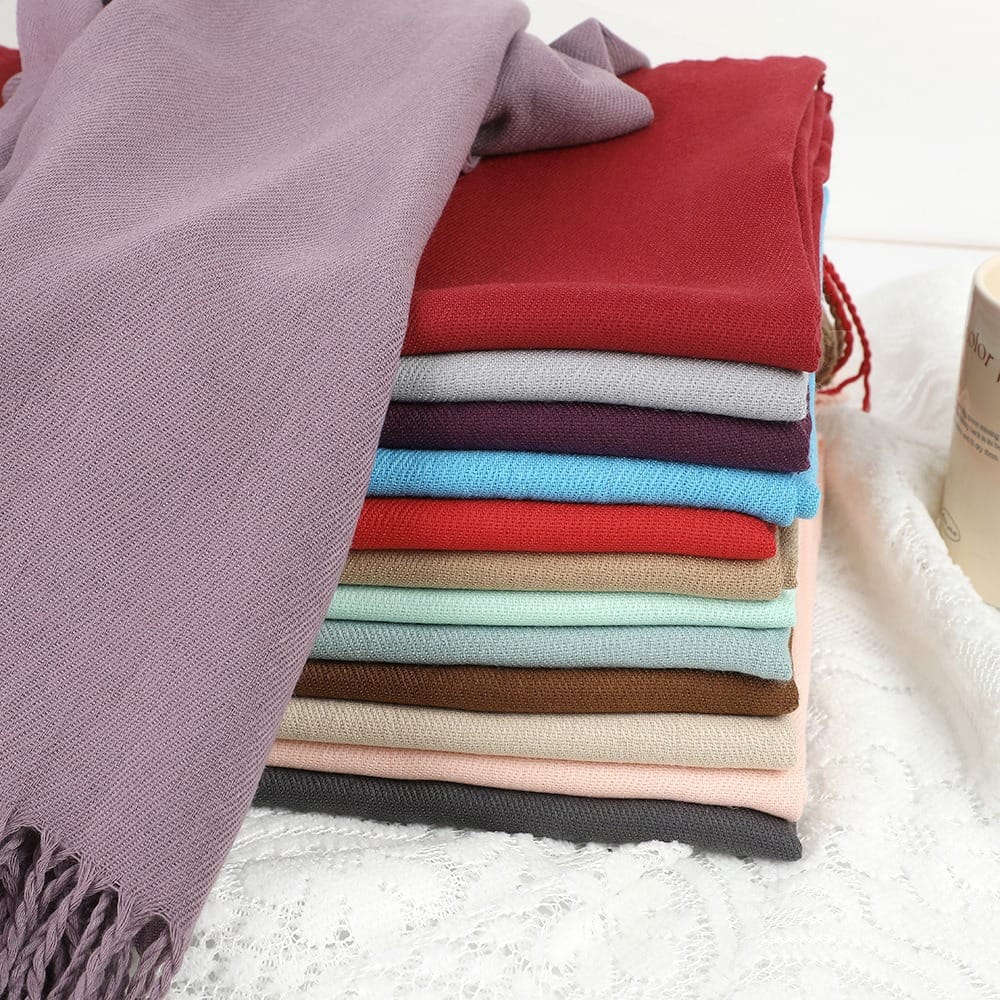
How to prevent it: fix the size in writing and measure finished pieces. Our cashmere feel and pashmina style scarves are 200 x 68 cm - long enough to wrap and wide enough to wear as a shawl or winter hijab.
7. Colour is not what the photo showed
What customers say: the camel arrives orange, the grey looks blue.
How to prevent it: order by colour number, approve a physical sample, and photograph your product pages on the bulk scarves, not on samples.
Your sample test checklist
| Complaint | Sample test |
|---|---|
| Shedding | Rub against black fabric for 30 seconds |
| Pilling | Rub against itself and a bag strap, then wash and recheck |
| Itching | Wear against bare neck skin for an hour |
| Static | Wear in a dry, heated room |
| Warmth | Wear outdoors in cold wind |
| Size | Measure several finished pieces |
| Colour | Compare bulk with the approved physical sample |
Order samples and test them yourself
We would rather you test our scarves than take our word for it. Arisava is a 10-year scarf, hijab and abaya factory working to an ISO 9001 quality system with OEKO-TEX Standard 100 tested fabrics. Samples take 10-15 working days, the MOQ is 50 pieces per colour, and every fabric composition is stated honestly on the label. Browse our winter scarves, read the winter scarf sourcing guide, or request samples.
Frequently Asked Questions
Why do some scarves shed fluff onto clothes?
Shedding comes from loose surface fibres, usually from heavy brushing or short, low-quality fibre. Rub a sample against black fabric before ordering - visible fluff is the warning sign.
How can I check if a scarf will pill?
Rub the sample firmly against itself and a bag strap, then wash it following the care label and check the surface again. Approve only samples that stay smooth.
What scarf material is not itchy?
Soft polyester cashmere-feel and brushed finishes are a common choice for customers who find wool or mohair itchy. Always wear-test a sample against bare skin.
What size should a winter scarf be?
Around 200 cm long and 65-70 cm wide is versatile - long enough to wrap and wide enough to wear as a shawl or winter hijab. Our main styles are 200 x 68 cm and 200 x 65 cm.
Can I get samples before ordering winter scarves wholesale?
Yes. Arisava sends physical samples in 10-15 working days so you can run these tests before placing a 50-piece-per-colour order.
Factory Direct
Request a Free Sample from Arisava
Everything covered in this article applies to your order. Our team responds within 24 hours with a full quotation and sample timeline.