Digital vs Screen Printing for Modal Hijabs: Which Should Your Brand Choose?
The print method you choose decides how your hijab feels, how long the design lasts, and what it costs. This factory-side comparison breaks down digital vs screen/rotary printing on modal, so you can match the method to your design, budget and order size.
Why the Print Method Matters More Than Buyers Think
Two hijabs with the identical design can feel and age completely differently depending on how the print was applied. The method determines hand-feel (soft vs stiff), wash durability, colour accuracy, which designs are even possible, and the cost per piece at your order size. Choosing wrong is how brands end up with prints that feel plasticky, fade early, or blow the budget. Here's how the two main methods compare on modal.
Digital (Reactive/Disperse) Printing
Digital printing jets water-based inks that dye the fibres directly.
- Hand-feel: Excellent. The ink "dyes the fibres directly" and leaves "no added texture," so the modal keeps its soft drape — critical for a scarf worn against the face and neck.
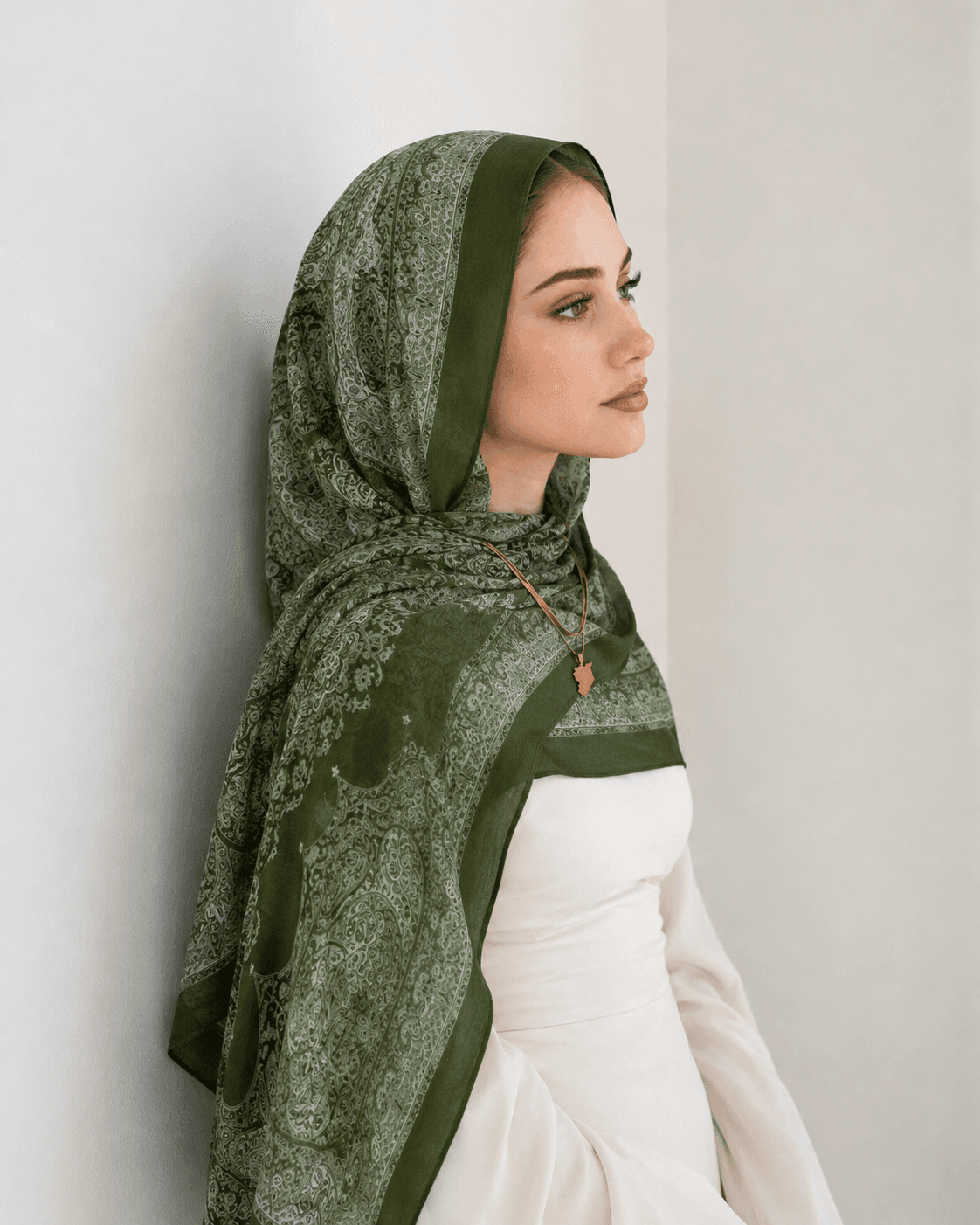
- Design complexity: Unlimited colours, photographic images, fine detail, watercolour gradients and marbles all reproduce beautifully.
- MOQ: Low. No screens to make, so small trial runs and even one-offs are viable — ideal for testing designs.
- Durability: Good and improving — modern digital prints can handle 40–50 washes and tend to "fade gracefully" rather than crack.
- Trade-offs: Gradual fading over many washes, and it can "struggle on dark fabrics" where the base colour slightly alters the print.
Best for: complex or photographic designs, watercolour/marble prints, low-MOQ trials, frequent new designs, and brands prioritising soft hand-feel.
Screen / Rotary Printing
Screen and rotary printing push ink through stencils, one screen per colour.
- Hand-feel: Depends entirely on the ink. Standard plastisol is "thicker and creates a thin, rubbery layer" that "can make a delicate scarf stiff and ruin its drape." Specifying soft-hand water-based inks fixes this — essential on modal.
- Colour accuracy: Excellent for solid spot colours and precise Pantone matching, which is why it's favoured for logo-driven and bold graphic designs.
- Durability: Very high on simple designs — often 50–100 washes — though when it does wear it can show "ink cracking or peeling" if a surface ink was used.
- Cost at volume: Setup (screens) is higher, but per-piece cost drops sharply at large quantities, making it economical for big runs.
- Trade-offs: Limited colours per design, higher setup, not suited to fine gradients or photographic art.
Best for: simple, bold, few-colour designs; precise Pantone/logo work; and large production runs where unit cost matters most.
Side-by-Side Summary
- Softest hand-feel on modal: Digital (or screen with soft-hand water-based ink)
- Complex / photographic / gradient designs: Digital
- Lowest MOQ / trials: Digital
- Best Pantone accuracy for solid colours: Screen/rotary
- Most economical at high volume (simple designs): Screen/rotary
- Maximum wash durability (simple designs): Screen/rotary
How to Decide: A Simple Framework
- Is the design complex or photographic? → Digital.
- Is it a simple, few-colour graphic or logo you'll reorder in large volume? → Screen/rotary with soft-hand ink.
- Are you testing a new design or ordering a small trial? → Digital (low MOQ).
- Is exact Pantone matching across huge runs the priority? → Screen/rotary.
- Not sure? → A factory that offers both can strike off your design each way and let you compare hand and colour before you commit.
The Question to Ask Any Factory
Whichever method you lean toward, ask: "Which ink system do you use on modal, and can you keep the printed area soft?" A factory that only offers thick plastisol screen printing will give you stiff hijabs. The right partner offers reactive digital and soft-hand screen options and recommends based on your design, not their limitations.
Frequently Asked Questions
Which printing method is better for modal hijabs?
For most modest-wear brands, digital (reactive) printing is the better default on modal because it keeps the fabric soft and handles complex designs at low MOQ. Screen/rotary wins for simple, bold designs in very large runs — provided soft-hand water-based inks are used.
Does digital printing last as long as screen printing?
Screen printing on simple designs can last longer (roughly 50–100 washes vs 40–50), but modern digital prints fade gracefully rather than crack, and the gap is small for typical hijab use.
Why does screen printing sometimes feel stiff?
Because standard plastisol inks form a thick, rubbery surface layer. Specifying soft-hand water-based inks keeps screen prints supple on modal.
Can I get a small trial run of a custom print?
Yes — digital printing needs no screens, so low-MOQ trials (around 50–100 pcs per design) are practical, making it ideal for testing new designs before scaling.
The Bottom Line
There's no universally "best" method — only the right method for your design, order size and budget. Digital keeps modal soft and handles complex art at low MOQ; screen/rotary delivers Pantone precision and volume economy on simple designs. The smartest move is to work with a factory that offers both and strikes off your design each way. Arisava is a factory-direct Muslim hijab and abaya manufacturer with 10+ years of experience offering digital reactive and soft-hand printing on 130–150 GSM modal, OEKO-TEX and ISO 9001 standards, low-MOQ trials and samples in 10–15 working days. Read our custom print ordering guide or send your design for a strike-off and quote.
Factory Direct
Request a Free Sample from Arisava
Everything covered in this article applies to your order. Our team responds within 24 hours with a full quotation and sample timeline.